(It is probably fine in the “fine arts”)
A Nuanced and Very-Very (VERY) Biased Examination AGAINST IT.
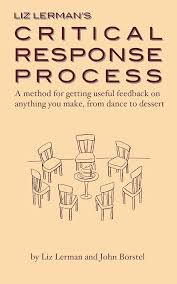
Liz Lerman’s Critical Response Process (CRP) is designed to create a structured and supportive environment for giving and receiving artistic feedback. While its methodology has gained popularity in the arts—particularly in the academic and artistic environment of theater and dance—I believe it has notable limitations.
The structured nature of CRP, while beneficial in some contexts (such as fine arts, unresolved projects in their infancy, or assessment feedback on an entire project), can actually create blind spots that hinder genuine artistic growth. This short essay explores the potential failings of CRP, particularly in how it shapes feedback dynamics, stifles necessary challenges, and may contribute to an over-sensitivity that leaves artists unprepared for the real world of critique.
The Structure of CRP
CRP consists of four key steps:
- Statements of Meaning – Responders share what they found meaningful or striking about the work.
In my experience, this is not particularly original, as Demidov incorporated a similar pedagogical approach as early as the 1920s. - Artist as Questioner – The artist asks specific questions to shape the feedback they receive.
This means the artist must have a question ready about their project. However, in my experience, immediately after performing a scene, etude, or good rehearsal, a good actor is in a non-cerebral state. This process is entirely counterintuitive for a good actor in rehearsal. It may be beneficial for cerebral individuals (directors, writers, performers who analyze their work cognitively) or those who have preplanned their question. But this means the question might not arise organically from the present moment; rather, it may be a pre-commitment (“I have to have a question”). True artists are in no position to access cognitive analysis at that moment because they are emotionally engaged. - Neutral Questions – Responders ask open-ended, non-opinionated questions to guide reflection.
This requires responders to be highly cerebral and critical about their questions, stripping them of anything instinctive or immediate. To me, this is the opposite of creativity. - Opinion Time – Responders offer opinions, but only if the artist consents to hearing them.
This means the responder may align themselves with their “sensitive” self, refusing to hear any critique or corrections. While unsolicited corrections or opinions can sometimes harm an artist, it is also the responsibility of the director or teacher to determine the correct timing for feedback. As Andrei Malaev-Babel puts it, one must learn “when to shut up.”
The structure of CRP is designed to empower the artist, ensuring they do not feel attacked or overwhelmed by unsolicited criticism. However, this very structure introduces constraints that can inhibit authentic and constructive discourse.
Art is Based on Discourse
My most immediate critique of CRP is that it overly structures feedback, limiting spontaneous and organic discussion. Just as an artist is inspired in their work, so too is a facilitator of acting training. I believe artistry progresses through dialogue—not through mere sincerity or a rigid “touch-and-go” methodology.
Artistic creation thrives on unpredictable and sometimes raw dialogue. By forcing responses into a predefined format, CRP risks diluting the richness of natural artistic exchange. For instance, in Step Two, the artist dictates the questions responders may address. While the creators of CRP argue that this ensures feedback remains relevant, it also prevents responders from addressing elements of the work that the artist may not have noticed or may be subconsciously avoiding. Key words: subconsciously or by habit.
This structure can shield artists from necessary critiques that could significantly enhance their growth—even if they don’t feel like hearing them.
The Risk of Over-Sensitivity: Creating a “Snowflake Effect”
Another major concern is that CRP’s emphasis on controlled, gentle feedback may contribute to a culture of artistic over-sensitivity. I believe CRP is a byproduct of a widespread “nurturing” wave within the broad blanket of woke ideology, where everything must be cushioned to the point of oblivion. But is this what artistic history tells us? Is this how artistic geniuses were born? I have my doubts.
CRP ensures that the artist is always in control of their feedback—deciding what questions are answered and whether opinions are shared. This fosters an environment where artists become accustomed to receiving only carefully curated responses. In other words: “I will hear only what I want to hear, and you better be careful how you phrase or frame it.”
This raises an important question: What happens when an artist nurtured solely within CRP’s framework encounters a scathing or provocative review? Or feels the disappointment of an audience?
If an artist has only ever received feedback in a manner that prioritizes comfort and safety, they may be ill-prepared to handle the more brutal, unfiltered critiques that exist in the professional world. Great artists must (and did) develop resilience—an ability to engage with criticism without feeling personally attacked. CRP’s model, by shielding artists from unsolicited feedback, may unintentionally rob them of this crucial skill.
Roy London’s Lies?
Roy London, a renowned acting teacher (and my mentor’s teacher), provided a contrasting philosophy that highlights a major blind spot in CRP.
London believed that a teacher’s job is not to merely tell the truth but to make better actors.
Short story: He once worked with an actress who, by traditional standards, was not particularly skilled. Instead of giving her blunt, honest feedback—even when she asked for it—he chose to praise every small achievement. His approach was met with resistance from other students, who felt he was being dishonest. However, over time, this encouragement helped the actress improve significantly, and she eventually became the best in the class. When questioned about it, he said:
“My job is not to tell you the truth but to make you better actors.”
Unlike CRP, which locks feedback into a controlled process, London’s approach recognized the importance of strategic withholding or shaping of truth to benefit the artist. A structured feedback system that does not account for the psychology of timing—when an artist is ready to hear certain truths—can be counterproductive.
Demidov’s Three Directions: A More Organic Approach
Nikolai Demidov developed an approach to feedback that aligns more closely with real-time artistic development. He proposed three directions:
- “Correct” – The actor is in a creative state, and this is acknowledged without over-explaining. (Encouragement)
- “Give it a Green Light” – Something promising is emerging. (Gentle push to be braver)
- “Take Your Time” – The actor is not yet ready. (Don’t rush)
Unlike CRP, Demidov’s method respects the timing of artistic growth and does not assume the artist always knows what they need to hear.
Can CRP Be Modified for More Effective Use?
CRP is not without merit. However, to be more effective, it could benefit from:
- Flexible Feedback Pathways: Allowing responders to highlight areas the artist may not have thought to ask about.
- Unstructured Feedback Rounds: Encouraging open dialogue beyond predefined questions.
- Challenging the Artist at the Right Time: Facilitators should assess when an artist is ready for deeper or more confrontational feedback.
Ultimately, Meisner had it right:
“You can’t learn to act unless you’re criticized. If you tie that criticism to your childhood insecurities, you’ll have a terrible time. Instead, you must take criticism objectively, pertaining it only to the work being done.”