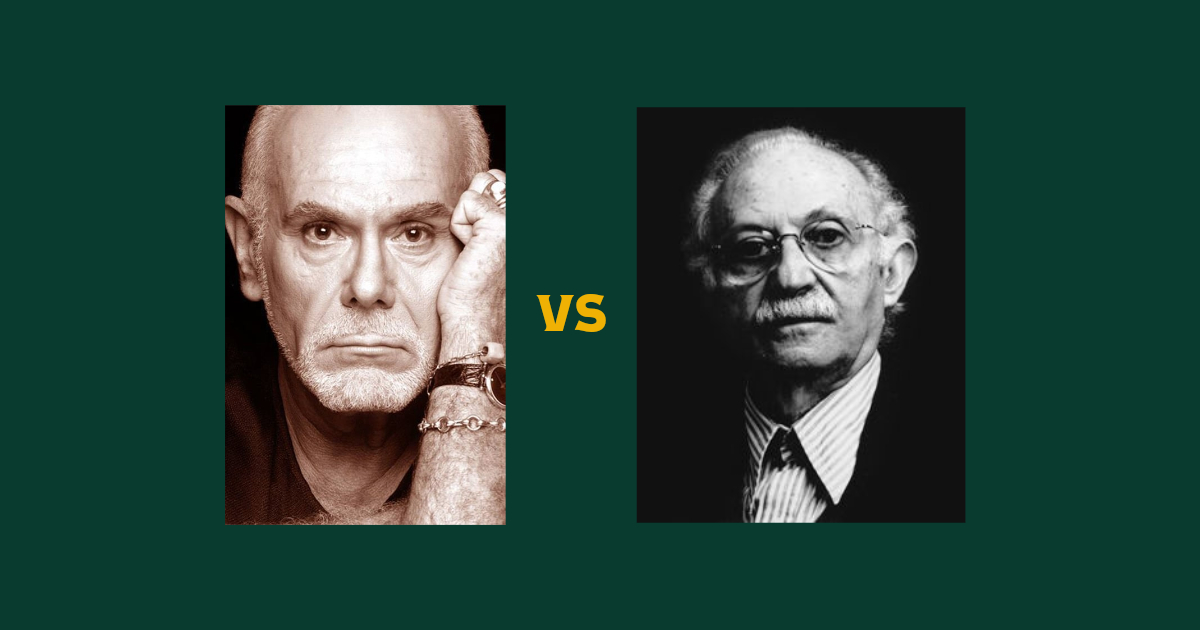
Andreas Voutsinas completed a sex scene, and Lee (Strasberg) asked, “What did you use there? I saw you were working on something, but I couldn’t quite see what it was.”
“I used a sensory memory of having taken a bath.”
“Why? What did that have to do with the scene?”
“I did it because I wanted to have a specific feeling… because I have a personal problem, and because of this personal problem, I couldn’t use the scene exactly as it was.”
“What do you mean by personal problem?”
No one in the Studio dared to move.
“A problem. A personal problem. It’s personal.”
Lee was like a hunting dog. “I don’t understand why you couldn’t use the scene as it was.”
“Alright,” Voutsinas shouted. “Alright, I’ll tell you. Right after sex, I always feel dirty and awful, and since the scene said the opposite, I had to use a memory that would make me feel good.”
Lee’s voice rose. “I don’t give a damn about your personal life, I’m not a voyeur, I don’t want voyeuristic stories. I don’t want to know what your personal story is.”
“But that’s why I—”
“If you think I’m here because I’m curious about your personal life, get out of here. GET OUT… LEAVE!!!”
Voutsinas moved to calm his teacher. “Please, please don’t… don’t get upset.”
Fifty people sat stiffly. Lee was flooded with rage.
Voutsinas, who insisted—Lee’s anger was such that spots of foam had gathered at his lips—said, “No, Lee, I’m not leaving, so please calm down. You’re going to have a heart attack.”
“The problem with you,” Lee shouted, “is that you’re trying to be a director. You’re always directing how a scene should unfold instead of just playing it. I’m trying to understand what you were up there as an actor, not as a person. Why do you assume that just because it’s a personal problem, you immediately have to substitute it?”
Hunched forward in his director’s chair, gripping the armrests tightly with both hands, Lee never took his eyes off Voutsinas.
“Why couldn’t you imagine—for once, just this once—that things weren’t like that? That with this woman, things weren’t like that?”
“I suppose I never thought—”
“Why do you have to control everything? Why do you need to know everything? This is a living art, and you have to go along with it. You have to go with ‘what if I meet someone one day, and that day is TODAY?’ Your problem is that you overdo everything. You know the scene too well. Stop supervising yourself. Maybe… there were good moments that would have appeared if you weren’t sitting on them, and if you had played freely instead of playing what you thought should be played. Don’t put on display what you think I want.”
Andreas Voutsinas says, “Once again, Lee knew. His genius lay in saying things in such a way that, suddenly, you discovered a new truth. He turned my failure into a point of victory.”