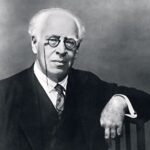
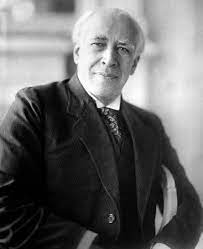
At first, a “war” broke out. It began when he was confronted with the idea that the real cause of failures in teaching at the Moscow Art Theatre (MAT) studios and school was neither haste nor a lack of professionalism or talent among the students. When he was invited to experiment with a completely new approach to actor training, he was shocked and displeased:
“Without ‘objectives’? Without ‘actions’? Without ‘attention’ or any of the ‘elements’? How is that possible?” he wondered. Through immense effort, they had laid the foundations for the science of acting, and now he was being asked to erase it all? “There was amateurism—we destroyed it, and now you want to bring it back?”
Stanislavski reacted strongly. He did not even want to hear about the idea; he was visibly disturbed and determined to reject it outright.
A “War” of Twelve Years
This conflict lasted about twelve years, with varying degrees of intensity. A lot of “blood” and nerves were shed on both sides. However, given the imbalance of power, the side that suffered the most was the one that refused to conform.
The situation changed when Stanislavski saw a group of students trained under the guidance of my student, Elena Morozova (who documented Stanislavski’s rehearsals and discussions with actors in his final years). These students had not been selected based on their talent. They were simply a group of young people interested in theater who happened to come together.
After three or four months of training, two or three times a week in their free time in the evenings, this group showed greater readiness to start working on a play than Stanislavski had ever seen in theater schools, even after one or more years of training.
Revisions and Additions to the Book
This forced Stanislavski to reconsider his work and take it more seriously. At the time, he was completing his book An Actor’s Work (the original Russian edition of 1938) and preparing to submit it to the publisher. However, the new findings clearly indicated that the book should not be released in its current form. Something important was missing—something essential.
There were thoughts of rewriting the entire book, but this idea frightened him. First, it would take too much time; second, it would require additional material, which would further delay the process.
“He had already dedicated 20 years to this book!”
After deep reflection, he realized that the old “system” and the new approach shared the same goal: artistic truth on stage. This reassured him. He decided that there was no fundamental contradiction between the two. He simply needed to supplement his book with elements confirmed by the new method. Thus, the old and the new would merge peacefully.
The New Approach: “Pushing the Limits”
Of the book’s 575 pages, the first 490 are devoted to the well-known principles of his system. However, the last 70–80 pages introduce something entirely new. In the final lessons, the teacher Torstov (Stanislavski’s alter ego) presents a “new element of great importance,” essential for understanding the “truth of the character.”
“If only you knew how important this new addition is!” he exclaims. The “pushing the limits” of psychophysical techniques, he explains, “skillfully engages the actor’s nature and subconscious in their work.”
The Paradox
He himself admits that, in his opinion, beginner students should be guided toward the subconscious from their very first steps on stage. “This should be done from the initial stages… Beginners should experience the joy of creation early on, not through words and phrases, but through their work itself.”
However, this contradicts the previous teaching method of his system, which started with analytical training and “elements.” This raised questions among students:
“Why didn’t we start with this? Does this mean the school is wrong? Without this ‘important element,’ did we learn the most important things only through ‘dead and dry terminology’? Were we, ultimately, trained incorrectly?”
Conclusion
Stanislavski’s final additions revealed a sense of incompleteness not only in his book but in the teaching of his entire system. While he attempted to correct his work, in reality, the “additions” were an indirect rejection of the fundamental principles that had until then formed the foundation of his system.