As I write this, it’s 6:00 AM, and I’ve been awake since 3:00 AM due to terrible back pain—a reminder of the years I’ve spent misusing and abusing my body just to deliver with passion (my passion) whatever was needed for the show.
Pain can be an obstacle, but it can also be a warning, a guide, a mentor, and, on occasion, an inspiration.
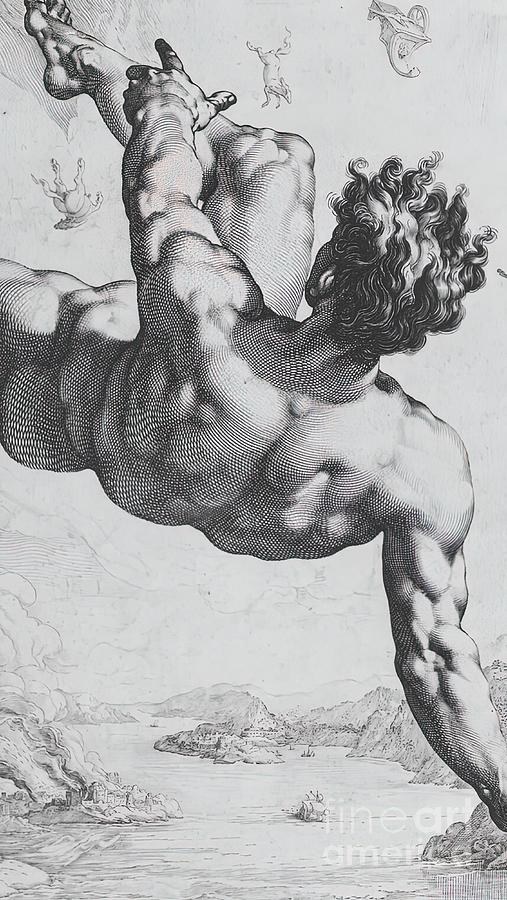
Back pain isn’t just physical. You become half a person (broken into two halves), and 50% of your back pain is mental—a mental game. Those who experience it know what I’m talking about. Chronic pain or discomfort can become like an obscure and twisted ugly tune, one that you’re forever trying to rid yourself of, but it always returns. Like that silly elevator music that accompanies your ride—the only problem is that the damn elevator always seems to be descending.
You find yourself on ground level and, depending on the day or the pain, sometimes on minus one or in a dark basement. In that darkness, with little or no visibility to distract you, you’re doomed to start reevaluating—what? Life, probably—choices, maybe?
The predominant question is always: “What did I do to deserve this?” And the answer comes instantly from a very eager brain: “Plenty.” It’s a statement that’s utterly true—nobody is sinless, and nobody goes unscathed by their own stupidity, narcissism, or pride.
One might think that pain exists to keep the checks and balances.
My pain “rumblings” are starting to sound like an “oh poor me” monologue instead of finding their target, so let’s set the target and toss some arrows.
When I’m in pain, I can’t sleep. When I can’t sleep, I read (and walk like a ghost around the house …), and when I read, I write.
So dear readers, let’s write.
I love old actors as much as I love old movies. I believe that from old-timers—those who don’t necessarily talk about specific techniques—we can learn the “craft” of our work. They aren’t obscured by philosophies but instead delve into practicalities. Their advice is practical, beautiful, and has been tested time and time again. It’s true, and it works. Sometimes it may sound simplistic, but I believe it carries as much truth as any philosophy or scientific explanation in the world. They often embody all four of M. Chekhov’s brothers: ease, beauty, form, and wholeness.
Anchors
Since I can’t move much, let’s talk about “blocking”—the art of moving on stage. The art of being able to move on stage can be left to luck, to organic processes, or sometimes it just needs a little help.
As far as directions go, we only have three:
- Going from
- Going to
- Staying in place
But then there are tricks, like anchors. Anchors are the people or things around you on stage, onto which you can latch (or address) your thoughts. In all simplicity, they are the people or objects you look at. On stage, where you look is very (extremely) important. It’s like the cuts in a film—it’s our stage editing.
For instance, if I am upstage (that’s towards the back of the stage, away from the audience) and a fellow actor is downstage on my left near the audience, he is anchor number one. According to old-timers, I now need anchor number two—something on my right. If there’s nobody else on stage on my right, then it might be a glass of whiskey or some object I want to fiddle with. So, I might drink during the scene and, from time to time, put down my glass on the table or on the stage on my right-hand side. Then, I might address you on my left. This enables me to turn from one side to the other. The audience sees much more of my face, and it might also help me make a point. Do I look at you while I speak to you? Or do I fiddle with my glass on my right side and turn to you just in time to deliver a caustic remark?
“What you are doing now must be right for what you are doing now, and right for what you are going to do next.”
Talking Off
Let’s say you’re looking around a room and admiring and remarking on various works of art or furniture. Once you’ve seen an object, you can turn away from it while talking about it, so your eyes actually land more readily on the next object you will refer to. That’s talking off.
For instance, if you are not talking off, the scene might go like this:
“This table is amazing” (while looking at the table, you turn your head and now look at the painting). “Oh my god, is that a Picasso?” You go toward the painting, and then you look at the window. “The light makes the painting look amazing.”
By talking off, it goes like this:
(You touch the table, and while walking away from it, you say) “This table is amazing.” (Now you’re already walking toward the painting.) “Oh my god!” (You look at the host, not at the painting.) “Is that a Picasso?” As you say that, you look at the window, then go toward it. “The light…” (You look back at the painting.) “…makes the painting look amazing.”
Get it?
More interesting, right?
After Surge
After surge is like a thought follow-through. You say a line, but the thought or emotion behind the line doesn’t stop when you say it—it follows through. This also allows you to move freely. For instance:
Let’s pretend I’m mad at you:
“Don’t do that again!” I walk away in deep anger. I step back toward you.
“I’ve had enough of you and your stupid statements.” I walk a few steps, pause, but my anger isn’t gone.
“What gave you the right to talk to me like that?” I come toward you now.
“Do you hear me?” I leave and go to the door. “Get out!” I come back toward you. “Get out!”
Again, it gives you the freedom to move.
Footwork
Laurence Olivier (aka Larry) said that his favorite command to himself was “relax your feet” and “always have more breath than you need.”
Feet are peculiar on stage, and old-timers seemed to have a foot fetish. We don’t seem to care enough. Anna Cropper, an actress who surely knew her footwork, was known to always find the feet of her characters first!
New Thought? New Move
A new thought can also be a good springboard for a move, especially if the two coincide. If you go through your text, you might find which things you say and which things just occur to you as thoughts. Find the new thought-moments, and new moves might spring out of them. Old actors say that new thoughts come with energy, and you can convert that energy into movement.
Follow Your Thought
Look in the direction you are going before you go, and the move will look and feel more natural. For example, if you are talking to someone on the other side of the room where there’s a table with drinks, in a deliberate manner, while talking to your partner, look around for the drinks. Then, afterward, go and get one.
How to Avoid Cliché Moves
One way to avoid clichés like sitting because you’re “oh so tired” or rising in anger is to give that movement a practical purpose as well. You rise not only because you’re angry but to look for a damn ashtray.
Do Things at Different Speeds
Again, Larry (aka Laurence Olivier) points out the value of walking slowly if you’re talking quickly and walking quickly if you’re talking slowly. Try it!
Use the Visual
Refer either by look or by gesture to things that are outside the stage. For instance, “he is upstairs” can be accompanied by a look or a gesture (however small) toward the room upstairs. It makes “upstairs” more vivid and believable to the audience.
Turn Your Back
Contrary to what most actors in our country claim, if you have a long part, spend some time on stage with your back turned to the audience. The English old-timers say it stops the audience from getting bored with your face.
One last (for now) old-timer trick I found, and I’m leaving you as I write this because I need to walk some of the pain off:
Words in Brackets
If you put your own words in brackets to a speech, it could clarify its meaning and also color your intentions (the words in brackets are not to be spoken, of course—they just aid your spontaneity).
Here’s a small text without brackets:
She to him: “You said that to me last year, on my birthday. We were outside at a café somewhere, and I was enjoying the view. It was getting dark, and we were about to leave. I thought I’d never forgive you, but I did, and I do now. But never ever say that again. I forgive you now, but I won’t forgive you again.”
Since memory and a request are the main ingredients of this small speech, let’s see it with brackets:
“(Now that I think about it) You said that to me last year, on my birthday. (Do you remember?) We were outside at a café somewhere, and I was enjoying the view. (Ah yes, it all came back now.) It was getting dark, and we were about to leave. (Anyway, back to what I was saying.) I thought I’d never forgive you, but I did. (Do you understand?) And I do now. (But pay attention now.) But never ever say that again. (As I said.) I forgive you now, but I won’t forgive you again.”
That’s it, folks.
This is my pain-induced night adventure, it is now 7:40am
See you at SAM, if I’m well.
love KF