It took me a long time to realize that being a poet essentially means to see—but take care, to see in such a way that what is seen is perceived by the audience exactly as the poet saw it. But only what has been truly experienced can be seen in this way and be received in this way. And the secret of modern literature lies precisely in this matter of experiences that have been genuinely lived.
[…]
And what, then, have I experienced that has inspired me? The spectrum has been broad. In part, I have been inspired by something that only rarely, and only in my best moments, has stirred within me as something great and beautiful. I have been inspired by that which, so to speak, stood higher than my everyday self, and I was drawn to it because I wanted to confront it and make it a part of me.
But I have also been inspired by the opposite—by that which, upon introspection, appears as the dregs and sediment of one’s very nature. Writing, in this case, was for me like a purifying bath, from which I emerged feeling cleaner, healthier, and freer.
Yes, gentlemen, no one can poetically depict something for which they themselves have not, to some degree and at least at times, served as the model.
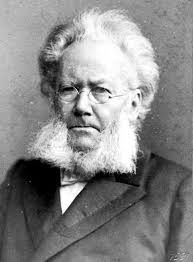
— Henrik Ibsen, “Speech to Norwegian Students, September 10, 1874,” in Speeches and New Letters, trans. Arne Kildal (Boston: Richard G. Badger, 1910), pp. 49-52.
After an absence of ten years, Ibsen spent several months in Norway during the summer of 1874. On September 10, Norwegian students marched to his home. This speech was Ibsen’s response to their greeting.