By Cameron Thor and Kimon Fioretos
Completeness of Action
Completeness of Action invites the actor to become thorough, thoughtful, and resolved in their body and their body’s relationship to its surroundings. To master both the root and boundary of movement. In the character’s physical life, the actor will apply “complete” both as an adjective: “having no deficiency, wanting no part or element; perfect in kind or quality; finished, ended, concluded” and as a verb: “bring to an end, supply what is lacking, fulfill”. The actor is more akin to an athlete than an intellectual. They are responsible for every physical knit and purl; from “the breath to the body, and all that passes between them. How the actor shapes themself in a setting will speak volumes more meaning than any dialogue. Our character’s shape in the world is responsible for the meaning of that world. Completeness of Action asks the actor to be the custodian of a body they envision, and to hon their ability to turn that vision into action in character. Completeness of action dismisses as myth the idea that a character’s body is tabula rasa to be filled in by impulse. There is an innate beauty in the body of every character which the actor makes clear, and this is done with the mind’s eye of imagination. Regardless whether the character is young and vital or old and decrepit, evil or good, human or alien; the actor’s power is in making that creature beautiful.
Beauty is the beating heart of all the actor’s actions. Completeness of Action insists that beauty is real, immutable, and objective. The fundamental goal of any performing artist is to apply their skill, talent, and discipline in an effort to draw forth beauty from circumstance. We hold that beauty has standards of excellence, and that we have long ignored these standards at our own cultural peril. Our experience of beauty does not spring forth from some exclusively personal font, unpolluted by history. Beauty may be in the eye of the beholder, but that eye is always human, and a human being’s intuitive sense of beauty arises from a pan-global millennium of natural, biological, and cultural sources. We are told by some that the individual “lived experience” is the only true experience, that we have no right to objectively judge what beauty actually is. But now, seen through even the most unsophisticated historical lens, it is clear that this subjectivism is a discredited idea. Once exposed to the blast furnace of wokism, these well-meaning notions posed by postmodern thinkers quickly became an obdurate cult of selfishness. Suggesting that any human effluence, impulse, or setting must be beautiful because the person farted it out in the grip of some misguided creative seizure, is as ridiculous to our reason as it is poisonous to our spirit. Adherents to subjectivism are little more than lazy. It is easier to assume that what one does has value simply because one does it, than it is to spend the time and energy needed to truly understand and practice the classical forms of beauty. Completeness of Action asks the actor to make the needed effort so that they may resume their rightful place as the maker of grace and dignity in form.
Actors are asked to bring stories to life and many of those stories are populated by terrible visions of human corruption. From Othello’s ambitious villain Iago to the ravenous Dr. Lecter in Silence of the Lambs, the actor’s craft is chock full of monsters. And despite their evil deeds, these people can be – and must be – carved by the actor with great beauty. This is contrary to experience; anyone who has ever encountered the real evil of a perjurer, murderer, or swindler will tell you they are not beautiful. Those among us who have given themselves over to the dark are inhuman and unlovely. But actors are not documentarians; they do not recreate these shadows, they interpret them.
Why must an interpretation aim to make even the grotesque beautiful? This question is fundamental not just to our practice, but to any art. Perhaps this question is fundamental to any exercise that asks human beings to see life as transcendent of an existence bounded by birth and death. Count Bezukhov in War and Peace, as a starving prisoner of war who suddenly discovers that there is no difference between him and the stars in the sky. Ethan Edwards in The Searchers, who can only turn away at the door and continue his endless seeking. The New Testament’s Risen Christ, returning Thomas to faith by inviting him to touch His unhealed wounds. All of these have images of the grotesque, all of these were made beautiful in interpretation. All of these invite the audience to see their mundane human existence as something made great by its very horror. The performing arts can teach us that beauty serves as a bridge between our inevitable human suffering, and the potential higher purpose of our soul.
We do not engage with beauty by accident, we come to it with practice and purpose. As a path to this process, we suggest Completeness of Action.
Completeness of Action argues that art is an arrangement of forms to evoke a common experience. Let’s break that down: Balance, rhythm, and interplay of body and space into beauty is the arrangement. Arrestment of subjective self-identity, a sense of common humanity, and teloses are the experience. In other words, beauty evokes transcendence. The practice of Completeness of Action invites the actor to investigate that art and those artists from our past who have had this kind of lasting impact on society and culture. Thanks to modern communication we do not have to travel to Florence to view Michelangelo’s David or to stand in person beneath the 20,000-year-old painted ceiling of the Lascaux Cave. In books and on the World Wide Web, we can study these and their influences. We can read the most insightful critique and engage with other interested persons from across the globe. To understand David Mammet we must understand William Shakespeare, and to know Shakespeare we must digest Sophocles. By dedicating ourselves to a search for and an understanding of what is beautiful in expression, we will gain access to it in our own practice and discovery of beauty.
Completeness of Action suggests that the body is the principal instrument in the actor’s creative process, and cannot prosper unless it is developed. Whatever body type you have been given is capable of flexibility and strength. Tall, short, narrow, or rotund; the actor’s body is their gift, and that gift can be developed into a creative force for beauty. Too often, a modern performer will present a torso of carefully carved musculature or hourglass hips and breasts, only to move that body with all the grace of a three-legged dog running downhill. Rhythm is at the heart of beauty, and rhythm is movement in time with balance and coordination of space. Completeness of Action suggests the actor place repetitive strength training in second position, and invites the actor to invest in activities that have proven themselves over time. The art of dance, the sport of fencing, jujitsu, or boxing all operate on the principle of cooperative competition. These are just four examples of what are many physical disciplines that require balance, timing, and a keen awareness of one’s surroundings. They tell a story, and insist that the practitioner be more aware of the other person than themselves. Completeness of Action suggests you pick the practice like these that inspires you, and develop a body capable of creating beauty.
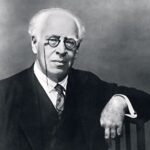
Completeness of Action invites the actor to coach and inspire their fellows. When engaged in our own practice, we may not be able to see just how thorough we can become in completing an action. But when we strive to serve others as a passionate and informed coach, we can return to our own practice more willing to push the outer boundaries of our ability. Since the influence of Stanislavsky in the first decades of the 20th Century, the practice of training actors has been burdened by the concept of The Great Man. While we are certain that unique individuals over the course of time have had an important impact on our craft, we have to shake off the modern trend to rely on the “expert”, and instead return to the centuries old practice of distributed knowledge in The Arts. Shakespeare was a genius, but the world in which he created his masterpieces was one of a company that both inspired and challenged him. The actor has always favored the model of a company. We teach what we learn, and learn from those around us. Knowledge is diffuse and contains far greater wisdom when it is fluid and able to err constructively. As soon as the actor learns something about how completed action evokes beauty, they grab another nearby actor and pass that on. The company of actors is competitive, constructive, chaotic, and far more creative than any one person. By coaching others, we form a linked chain that can make common cause with beauty.