(Physical actions, drilling, etudes, and active analysis)
From the Boris Zon memoirs: Konstantin Stanislavski (compiled and translated by a method teacher)
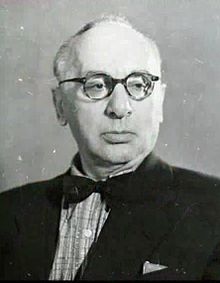
Here’s what the brilliant Russian teacher of Stanislavsky’s ‘system’ – the unknown (in the West) Boris Zon wrote in his 1955 memoir about his time repeatedly observing Stanislavsky’s classes and rehearsals near the end of Stanislavsky’s life (1933-1938).
KF note (their talks are around active analysis and physical actions the latest rendition of the system)
1. Boris Zon: If you now work at the table for only awhile, when do you go to the next step? Konstantin Stanislavsky: Today, we are reading the play, tomorrow you are welcome to act. If its not enough to read the play once, we will read it twice.
2. Z: But the actors don’t know anything? KS: They don’t know the words. They know what to do. If they’ve forgotten – I will remind them. If a question comes up – we will look at the text: “Excuse me, it seems, that something has been said about it in the third act”… we will find it…etc.
3. Z: This way, at first, you don’t even need the text of the roles? KS: We will approach it step-by-step only logically through an action.
4. Z: That means one doesn’t have to sit at the table at all? KS: Some places they are still sitting today … always, even during new attempts, actors might want to sit down at the table.
5. Z: In which new work has your new method been fully realized? KS: Fully – not in any, partially – in all my last works [productions]. The thing is that extreme involvement with the table led us to “indigestion”. The way a capon is fed with nuts and the way he is overfed so that his stomach does not digest food anymore, in the same fashion the actor who is, overloaded with “table” abundant “food” that is not recreated immediately, often cannot use even 1/100th of what they worked on. My new method – is a development out of the previous one.
6. Z: So as far as I can understand from today’s rehearsal you lead an actor to an involuntary appearance of the image [Russian theatre term for the play’s character embodied experientially by the actor on stage] from the very process of action and certainly from the actor himself? KS: Absolutely.
7. Z: And how do you get characteristic features: age, profession, nationality, etc? KS: Only from the action. For instance, an old man… what prevents him from moving quickly? Heart, legs… find in special etudes the heartbeat and “wooden” legs. if you need to, tie the legs under the knees with a towel. Feel what gets in the way. I am explaining this extremely primitively but the essence is the same for all occasions.
8. Z: So when and how does one decide on bits [beats] and tasks/problems [objectives] now? KS: So we act in the order of the facts [circumstances], as I already said, in a play and we see: it turns out we have already acted out a bit [beat], a new one starts. Let’s say we were acting “a meeting”, now apparently, we are acting “getting to know each other”. A task/problem [objective] appears also involuntarily. Most important — simpler tasks/problems [objectives]. Maybe this way and maybe that way and also that way… We will take some one thing closer to the through-action and act it.
9. Z: How does one achieve full freedom of the muscles? KS: By coming out from nature in everything and forgetting “theatre” to the maximum. There is not any ‘system’ at all, whatsoever, there is nature. An attempt to get closer to nature, to a maximum degree, makes up the care [concern] of my whole life. Here you ask me about the freeing of the muscles and why the most difficult thing on stage is to walk? Because on stage we – out of embarrassment, out of false traditions, out of poor taste, deform our nature.
10. Z: Does it follow from your theatrical principles that a production should necessarily be miserly with the means of expression and that artists — I’m talking about scenic design — are designated a very humble place? KS: I accept the most fastidiously complex design of a production when everything is justified in it through the actor but because the stage art is still on an extremely low level, because actors don’t yet have the elementary training to a remote degree that painters and musicians have, then we don’t dare make actors do backbreaking, for them, things. There’s not going to be any truth in it anyway. People establishing themselves as directors or scenic designers has nothing to do with the art of theatre.
[KFioretos Notes: What the author fails to understand as Shon on did at the time is that whatever K. Stanislavski is talking about is in fact what Demidov showed and expressed to Stanislavski a decade earlier (Stanislavski probably out of embarrassment doesn’t obviously mention it ) if one reads the text carefully will notice things that are in fact steps toward the organic technique !
For instance :
“By coming out from nature in everything and forgetting “theatre” to the maximum.”
But take a good look…Zon and the author emphasize the word “theatre” and the fail to grasp the importance of the word “FORGETTING” (MY EMPASIS) something Stanislavski already knew but would not necessarily disclose to Zon or anybody else.
Let’s not forget that physical actions and active analysis after all are the latest entries in the system and these entries are Stanislavsky effort to “answer” to Demidov’s criticism of the system.]