
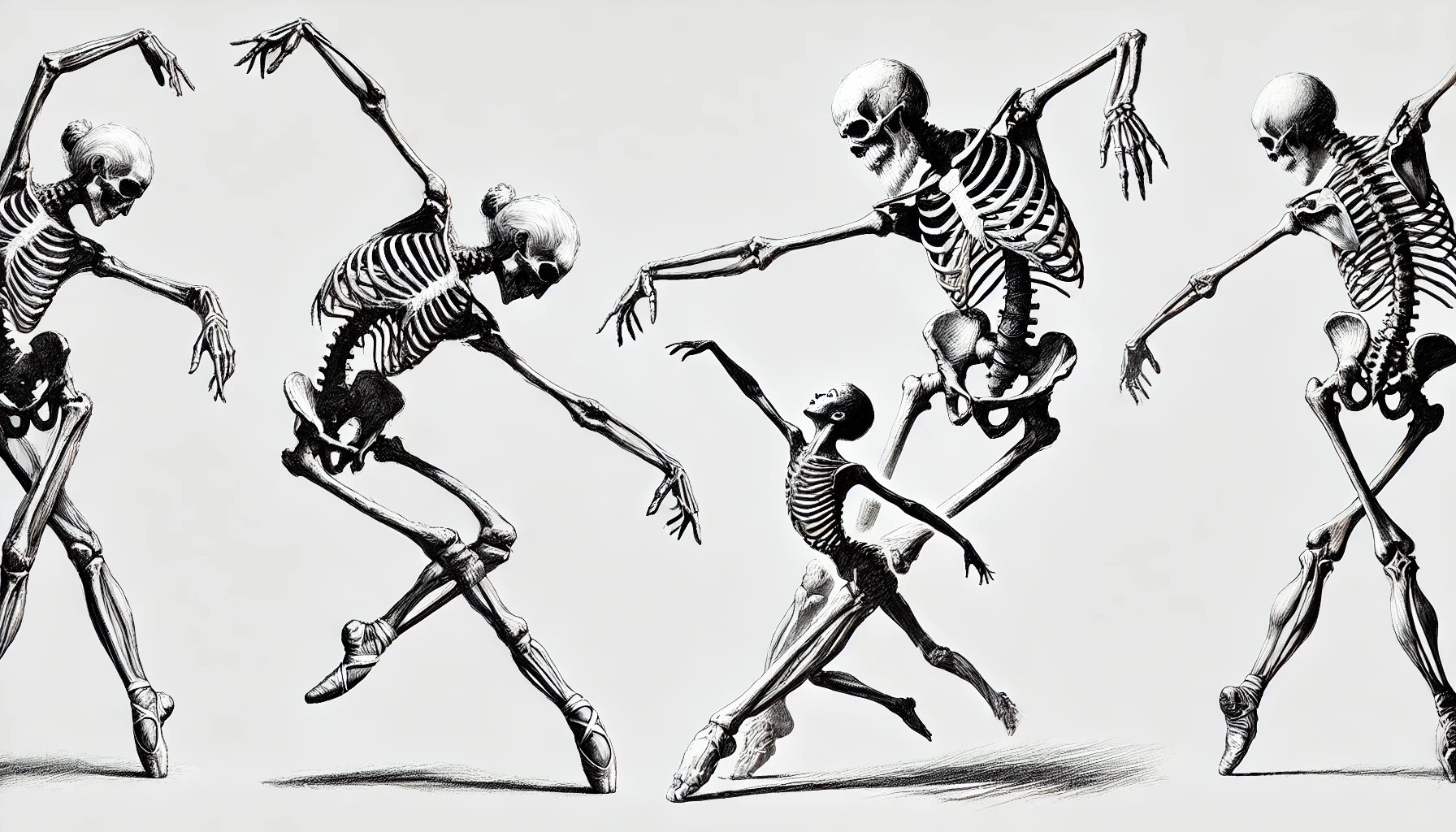
An actor must not only have a fully functional apparatus for embodiment but also constantly improve it. However, to improve this apparatus, one must understand its capabilities, the laws governing this apparatus, and the laws of movement on stage. An analysis of the “movement culture of the actor” provides the answers to these questions; such an analysis is essential for a successful creative process in the theater as well as for training an actor in an educational institution.
As is known, the principle of unity of form and content underlies the realization of any performance. Form serves to concretize content, and content brings form into existence. Everything great and genuine created in our theater practice has captivated people’s minds precisely because content and form were in true unity. This is well known and undisputed, yet we sometimes encounter the fact that there are significantly more good expositions than good performances. It seems that both the idea and the actors’ emotions are engaging, yet the audience remains indifferent. Why is that?
There are many reasons why a performance may lack vivid expressive form. One of them is that actors do not want or do not know how to work on creating form in a performance, relying on the assumption that form will arise spontaneously as a result of genuine emotional experience. A huge reliance is placed on intuition. It is assumed that intuition—and only intuition, not mastering the technique of stage movement and the ability to correctly use this technique on stage—will bring to life an accurate and clear plastic form. Reference is often made to the authority of K. S. Stanislavski.
Stanislavski indeed attributed exceptional importance to intuition. But Stanislavski never denied, and could not deny, the necessity of understanding the laws underlying the technique of stage movement. Scientific research shows that intuition itself is based on experience and practice previously imprinted in human consciousness, although the mechanisms of “intuitive insights” have not yet been fully revealed by psychophysiological science. Nevertheless, as pedagogical practice shows, if we want the form in the actor’s creative work to be born intuitively, the actor’s embodiment apparatus must be properly tuned in advance. The actor must master the techniques of various stage movement skills. This, combined with knowledge of the specific forms of behavior of people of different nationalities and historical periods, forms the experience and practice on which an actor can correctly act in a role.
If a theater does not work on the proper and vivid embodiment of the hero’s life in his physical behavior from performance to performance, this phenomenon gradually leads to a loss of movement qualification. Eventually, the actor loses the taste for performing complex movements that require high preparation. If the degree of preparation for stage movement lags behind the profession’s demands, it is primarily the result of a low level of psychophysical qualities, a lack of necessary stage movement skills, and, finally, insufficient knowledge about certain manifestations of people’s external culture. In cases of inadequate actor preparation, even with proper rehearsal work, it is difficult to achieve accurate and expressive behavior in a performance.
To create a plastically expressive image, the body must be specially prepared. This preparedness should provide the actor with an external technique that allows him to perform any movements easily and correctly. External technique, when combined with creative talent, can always create a high stage result. But to understand an actor’s possibilities in the process of physical embodiment, it is necessary to understand the “laws of the body on stage.”
Observations show that young actors generally perform movement less effectively than experienced actors, even though it is well known that it is easier for a young body to move. This view is only correct in terms of everyday human movement. Youth itself does not create quality in stage movement. Experienced masters are significantly more expressive in their physical behavior on stage than the youth. This pattern persists even at an age when the general decline in tone should, seemingly, negatively affect the quality of stage movement.
It is known that external technique, like all kinds of mastery, comes with years of work in the theater. Naturally, the question arose: can the body be prepared in advance for expressive physical action in a role during training in theater school or even while working in theaters? Practice has shown that the answer to this question is affirmative.