DOGMA AND ORTHODOXY IN ACTING
Each acting technique, each approach to the craft, has its own lineage — practitioners who serve as guides, passing down their knowledge and helping actors unlock their full creative potential. Think about it — once, the relationship between actors and their craft was direct and diverse. Actors learned through trial and error, through real-time experience, […]
Charles Erich Conrad: The Evolution of Meisner BY CONRAD and the Almost Arrival at Demidov
In the history of acting, very few teachers have managed to challenge and significantly improve upon the teachings of their predecessors. One of them is Charles Erich Conrad, who, despite being a direct student of Sanford Meisner, ultimately rejected and reshaped key aspects of Meisner’s technique. His approach corrected several weaknesses of Meisner’s system, particularly […]
Emotional Tactile Reading
Step 1: Attitude Toward the Text Do not approach the text with full conscious attention.Keep a “glance” over it but allow your subconscious to absorb it.Avoid “fully experiencing” the text at this stage; do not react emotionally yet.The goal is to let the words sink into the subconscious rather than process them intellectually. Step 2: […]
The Transparent Eye
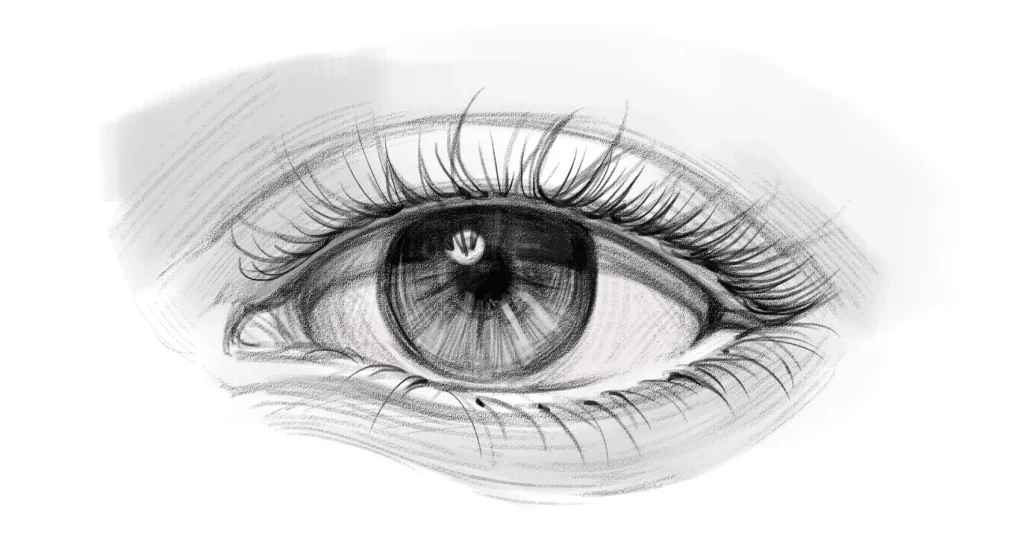
If the eye is cloudy → the mind is unclear. If it is restless → the body is unfocused. If it is closed → with contracted pupils, the actor is not receptive. Cleansing and calming the eye stabilize both body and spirit. Exercise for Attaining the Transparent Eye Select an object and look at it. […]
An interesting take from article in literature
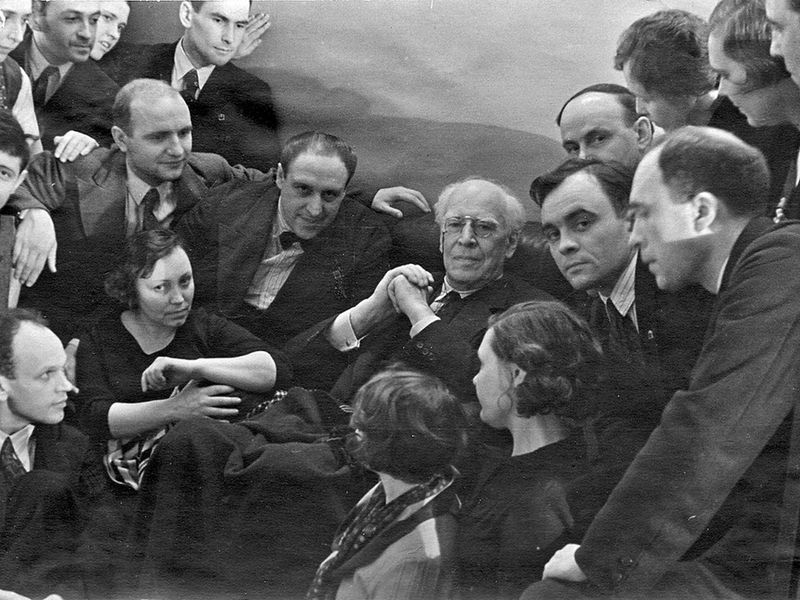
“[…]Sulerzhitsky and Demidov stand beside the more familiar “figures of Meyerhold, Vakhtangov and Mikhaïl Chekhov and, in their vicinity, Sushkevich, Boleslavsky, Birman, Uspenskaya and Giatsintova from the efflorescent First Studio.[..] Apparently the highly regarded people that knew how to teach the system were people like Sulerzhitsky, Demidov, Vakhtangov, MIkhail Chekhov, Meyerhold (as you notice all […]
The Actors Studio and Lee Strasberg (By Robert H. Hethmon)
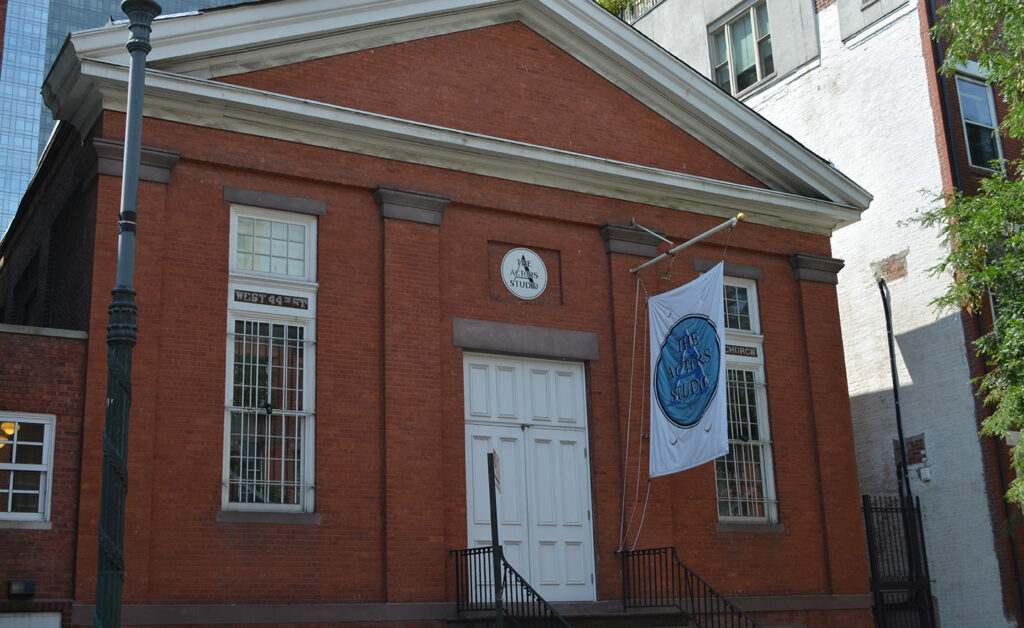
In recent years, visitors to New York seeking serious theater inevitably find themselves drawn beyond the glitz of Broadway and Ninth Avenue to a humble, two-story church building in a neoclassical Greek style. Surrounded by drab apartment buildings, it sits just a few feet back from the sidewalk, enclosed in front by black-painted iron railings. […]
“Technique-unfaithful”

At S.A.M., we honor tradition. We respect all existing methods and techniques. However, we constantly challenge the rules to create new approaches. The idea that actors should be “technique-unfaithful,” exploring various disciplines and methods, is not groundbreaking, but it remains essential. Anyone who has set foot on stage or worked in diverse environments knows that […]
TRAINING AND DRILL = ETUDES ?
In his third (abridged) book, Demidov, in the first two chapters, explains what Stanislavsky was trying to figure out in the “school” he created. Stanislavsky, according to Mr. D, had planned two paths (even though a third is always there “the path of the “naturally gifted” actor is by nature there). The first path is that of […]
3 TEXTS I USED TO READ IN THE FIRST YEAR ACTING CLASS, FIRST DAY (NOT ANYMORE)
To Train or Not to Train (Excerpt from a 1978 text written by an actor) Many people believe that training in a drama school is a waste of time.Acting, they claim, is something you either have or you don’t. How can you teach someone to do something that is either in their nature or not? […]
Stanislavski’s Vision of the Taskbook
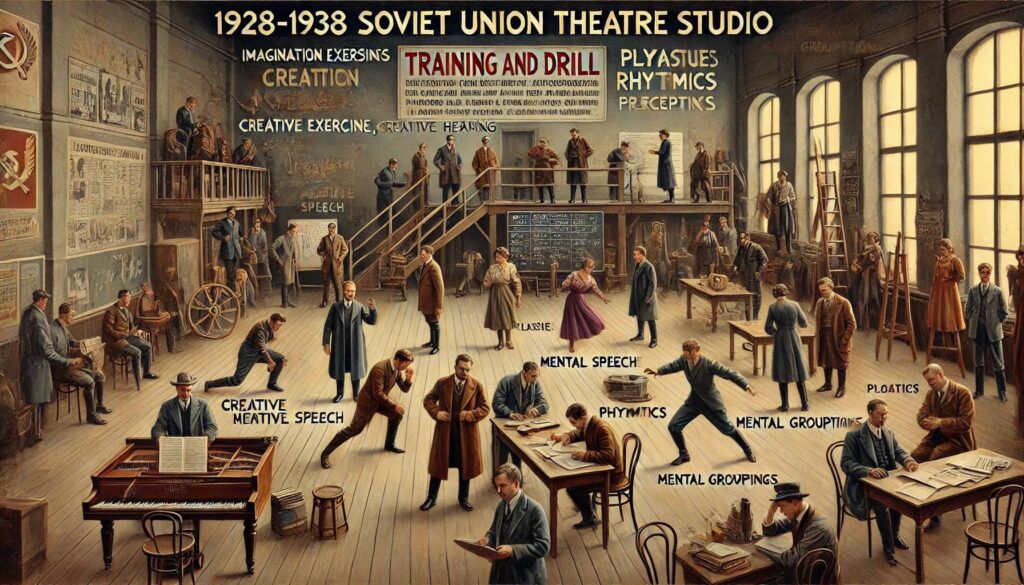
Beyond Self-Observation Training: Stanislavski’s Actor Cultivation Apart from self-observation training, Konstantin Stanislavski had two other types of training under the title “cultivation of the actor.”G.V. Kristi describes its content: “The cultivation of the actor, as understood by K.S. Stanislavski, is the daily training of the internal, psychological, and physical qualities that support the actor’s creativity.” […]