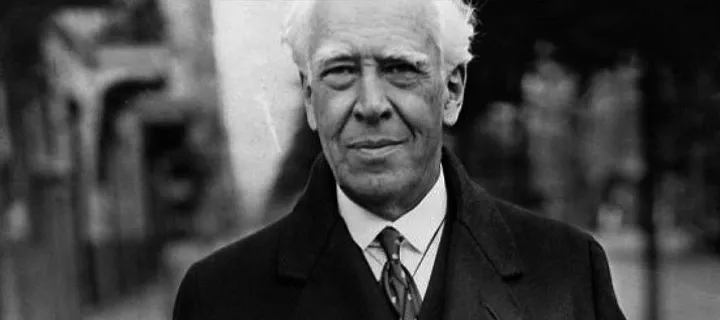
This text is by no means a detailed historical overview of Konstantin Stanislavski’s system, but an attempt to fill certain “gaps” caused by half-knowledge, the perpetuation of inaccuracies, and the repetition of foolish “sound bites” from people who have not studied the system. These individuals may have skimmed through some of the hard-to-read translations and hastily drawn conclusions.
Stanislavski dedicated his entire life to understanding, solving, and mastering what he called the “creative state,” which is known today among athletes as “the zone” and among scientists like Mihaly Csikszentmihalyi as “flow.”
In his quest to answer questions such as how an actor can deliberately enter this state or whether there is a mechanical sequence of actions that can create the environment necessary to host such a state, Stanislavski developed a series of exercises and sequences that became known as his “system.”
Over the years, his theories and practices did not remain static. He constantly revised, updated, and improved parts of his system. However, someone who has only superficially studied it might perceive a series of conflicting ideas. From the outset, Stanislavski understood—like many others—that emotions are difficult to control. For instance, in a 1953 speech, Michael Chekhov humorously referred to emotions as “capricious.”
Emotions cannot be summoned through sheer willpower, and the emotions experienced during a creative state cannot be reproduced on command without risking a violation of human nature. Directors or teachers who demand “emotionalism” on stage force actors into a form of indication—an ambiguous state that ultimately results in the imitation of an emotion or idea. For this reason, Stanislavski rejected the notion of emotion as a tool to achieve the creative state. However, he never dismissed genuine emotion as an essential product of stage performance.
He emphasized repeatedly that no one should focus on seeking a specific emotion but rather on exploring the given circumstances of the play that provoke the desired feeling.
The core principle, “the subconscious through the conscious, the organic through the intentional,” remains unchanged to this day. Early in his work, Stanislavski believed that understanding how the character thinks was essential. It appeared that the secret lay in thought rather than emotion. Thus, he embarked on a journey believing that emotional states could be awakened in an actor through psychological stimuli.
At this stage in his method, he hypothesized that a character’s emotional reactions and behaviors were entirely determined by the psychology embedded in the character by the playwright. He introduced the concept of “objective”—the character’s driving desire or will. Modern terminology refers to this concept with terms like “intention,” “want,” “need,” or “goal.” Stanislavski theorized that performing a chain of such objectives within the play’s given circumstances would allow actors to enter the character’s psychological state, thereby awakening analogous emotions within themselves.
Actors were instructed to break down the script into smaller sections—referred to as “bits” (not to be confused with the term “beats,” a misinterpretation by Americans due to Stanislavski’s thick Russian accent)—and identify deliberate objectives within each section that answered the question, “What do I want?” At the same time, he introduced the concept of the super-objective, which encompassed all of the character’s individual objectives.
Stanislavski spent 20 years developing this stage of his system. However, by the late 1920s, he began moving away from a purely psychological approach. He became convinced that actors remained too dependent on elusive emotionalism. To truly desire something, it was not enough for actors to grasp it intellectually—they also needed to feel it deeply within. This led actors to once again chase emotions beyond their control.
Stanislavski eventually incorporated a new approach to character work, emphasizing a sequence of physical actions executed by the actor. By following a logical chain of physical actions on stage, actors could provoke a natural series of thoughts and desires within the character, leading to involuntary, authentic emotions.
In 1929, he wrote:
“The goal is as follows: the actor must be able to tell me with a clear conscience what physical actions he will perform on stage, based on the given circumstances defined by the playwright, director, or his own imagination. Once these physical actions are clearly determined, all that remains is to execute them. I emphasize the importance of physical execution—not emotionalism. Through the proper execution of physical actions, emotion will arise naturally.”
By 1935, Stanislavski referred to this new approach as the method of physical actions, although he often warned that terms could never fully convey what he was attempting to communicate or achieve. He rejected the term “psychophysical actions” to avoid misleading actors into portraying fake emotions. However, for clarity in modern practice, many refer to these actions as psychophysical, as they integrate both internal and external elements.
Stanislavski concluded that action—now psychophysically integrated—became the central tool for influencing scene partners and evoking authentic reactions. The basis of this communication, he observed, was often conflict, as each character seeks to impose their beliefs on others. This transformation of action into a dynamic exchange on stage underpins truthful performance.
In his final years, Stanislavski emphasized verbal action, stating that words, like physical actions, must be active and purposeful in affecting others. He asserted that words must “compel” scene partners to think, see, or understand in the speaker’s desired way.
Ultimately, Stanislavski’s discoveries culminated in a unified system where action, communication, imagination, belief, and truth intersected to support the actor’s creative state.
I hope this overview clarifies some aspects of the system.
With love and respect,
KF
[1] Yes, without rejecting his earlier methods, the myth of Stella Adler approaching Stanislavski in Paris and claiming that he had renounced his old techniques and exercises is entirely inaccurate.
[2] Caution: In no case did Stanislavski reject the psychology that motivates the character. As in the beginning of his journey, he continued to seek a way to summon the actor’s much-desired “creative state” on stage.
[3] Author’s note: Physical action equals “psychological-physical behavior” and not merely a series of simple physical “activities” such as “drinking water,” “wiping something,” etc., unless these are motivated by the given circumstances.
Copyright 2020 Kimon Fioretos, All Rights Reserved.